

Jiu Gorge: a short trip from Petrosani, Romania
12 August 2026 | dualcv
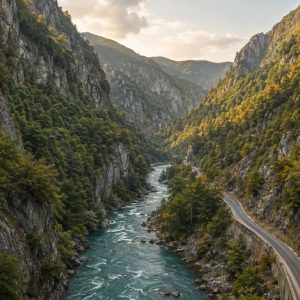
A few minutes’ drive south of Petrosani, the valley narrows sharply and the road slips between steep slopes: this is where the Jiu Gorge begins, a stretch of nature that many travellers pass through without stopping. On maps and in official records it appears as Defileul Jiului, and its central section is protected within Defileul Jiului National Park. If you only have an afternoon, it is a good alternative to a full day on the Parang ridge: the scenery is different — rock, dense beech forest and the Jiu River cutting through the mountain. Below you will find how to get there from Petrosani, what you will see along the route, how to combine the visit with other Valea Jiului sights, and a few practical tips for a short outing that needs no serious hiking kit.
What the Jiu Gorge is, and why an afternoon is enough
South of Petrosani, the Jiu River has carved a long, narrow passage through the mountains, running for tens of kilometres. Locals and many visitors call this stretch the Jiu Gorge; on maps and in official documents it is Defileul Jiului, with its central section protected inside Defileul Jiului National Park, designated as a protected area in 2005.
The gorge links the Petrosani basin, in Hunedoara County, with the Gorj region to the south. The Parang Mountains rise on one side and the Vulcan Mountains on the other, and the slopes are largely covered in beech forest. That is why the landscape changes so clearly compared with the alpine routes of the Parang: here it is rock, forest shade and water that set the tone.
For a guest with only an afternoon to spare, the advantage is clear. You do not need long-hike gear or a whole day. You can drive into the gorge, stop at a few points, take photos, walk a short way down toward the river and be back in Petrosani before evening. It is the kind of outing that fits even a short stay, when you want to see something different without reshaping your whole schedule.
Many people pass through the gorge on the way to Targu Jiu without treating it as a destination in its own right. That is part of its appeal: it doesn’t carry the crowds of the most sought-after sights, which keeps its quiet character intact. If you like finding places without much bustle, the gorge fits that description easily.
How to reach the Jiu Gorge from Petrosani
Access is simple. From Petrosani you head south on the DN66 (E79), the road that connects Valea Jiului with Targu Jiu. The entrance to the gorge is only a few kilometres from town, and the more open stretch — with close slopes and river views — is reached in about 30 minutes by car.
The road is narrow and winding, with many bends. At certain times of year rocks may fall from the slopes, so you drive carefully and without rushing. This is not a route for speed but for the view: many of the good places to stop appear exactly where the valley tightens and the rock draws near the road.
There is also the train option. The Petrosani–Targu Jiu line crosses the gorge through many tunnels, viaducts and bridges, and there are a few small halts inside the park where you can get off. The rail journey is, in itself, a way to see the area from a different angle, beneath the rocky slopes and over the Jiu.
If you are coming from elsewhere in the country, the northern gateway of the gorge is Petrosani itself, while the southern one is Bumbesti-Jiu. For guests staying in Petrosani, the starting point is close at hand, and an afternoon in the gorge ends comfortably with the drive back into town.
When you stop, pick spots where the road widens or where there is room off the carriageway. Avoid bends and places with poor visibility — the traffic, though not heavy, includes lorries. A few minutes’ care over where you park makes the difference for safety and for the calm of the stop itself.
## What you see along the route: cliffs, forest and a remarkable railway
The first thing you notice in the Jiu Gorge is how vertical it feels. The slopes climb steeply on both sides of the road, and in many places the sun reaches the valley floor for only a few hours a day. Beech forest covers almost everything, which makes the area especially photogenic in autumn, when the leaves turn.
The Jiu River runs alongside the road, sometimes calm, sometimes fast. In certain seasons rafting trips are organised on its water — an option for anyone after something more active than a walk along the bank. Even without going into the water, the sound and movement of the river give the place its character.
The railway is a feature in its own right. Building the line through the gorge required dozens of tunnels and bridges, and the route remains an impressive piece of engineering for the difficult terrain it crosses. From some points on the road you can see viaducts and tunnel mouths set among the rocks.
The park also protects a few well-known rock formations, among them the Sphinx of Lainici and the Rafaila Rocks. As a protected area, visitor access is limited in certain sections, precisely to avoid disturbing the habitats. Hunting and fishing are not allowed, and the wildlife includes species rarely seen elsewhere, from birds of prey to large mountain mammals.
The light shifts a great deal through the day. In the morning and late afternoon, the sun slants in between the slopes and brings out the texture of the rock and the green of the forest. Around midday, with the sun high, the contrasts are harsher. For photos, the afternoon hours usually give warmer frames — one more reason to set off in good time.
One thing is worth stating plainly, so you don’t arrive with the wrong expectations: the Jiu Gorge does not have a dense network of marked trails the way mountain resorts do. It is more of a route you follow by car or by train, with short stops, riverside walks and viewpoints. That is exactly why it suits an afternoon and does not call for the preparation of a full mountain hike.
How to combine the visit with other Valea Jiului sights
Because the gorge does not take a full day, it is easy to pair with other points of interest nearby. Petrosani works as a base from which several directions stay within reach.
Lainici Monastery sits inside the gorge, about 25 kilometres south of Petrosani. It is an old place of worship, built in 1817, and a familiar landmark on the route between Valea Jiului and Gorj. It fits well if you are heading deeper into the gorge anyway.
Bolii Cave, about 10 kilometres from Petrosani, is a short and accessible stop, good in particular for families with children. It is the kind of sight that pairs well with a day when you don’t want to walk too far.
Banita Fortress, a Dacian stronghold included on the UNESCO list, is a choice for anyone who wants to add a historical note to the day and see the area from a different angle.
And if time and energy remain, the [Parang area](/blog/trasee-parang-petrosani) is about 10 kilometres from town, in the opposite direction — for a clear contrast between the gorge landscape and the alpine ridge. In the same way, a drive toward the [Transalpina from Petrosani](/blog/transalpina-petrosani) rounds off a visit to the region nicely, in the season when the road is open.
All of these options start comfortably from Petrosani, which makes the town a practical base for exploring Valea Jiului over several days.
A simple plan for an afternoon
If you want a clear structure, an afternoon in the Jiu Gorge can look like this. Leave Petrosani around midday or shortly after and head south on the DN66. In about 30 minutes you reach the open section of the gorge, where you stop at the first point at which the valley tightens and the rock draws near the road. Spend 20–30 minutes there — photos, a short walk down toward the river, a quiet moment.
Then carry on a few kilometres south, with one or two stops, as far as Lainici Monastery, if you want to go deeper into the gorge. On the way back, if time and energy remain, you can add a short stop at Bolii Cave. By evening you are back in Petrosani, without having spent a whole day. It is a relaxed pace, easy to adjust depending on how much you want to drive and how often you want to stop.
Who the Jiu Gorge suits
The route suits several kinds of guest. Couples spending a short weekend in Valea Jiului find an easy outing here, without the effort of a mountain hike. Families with children can pick the accessible stops, such as the roadside viewpoints or a visit to Bolii Cave on the same day.
Small groups of friends can combine the gorge with a rafting trip in the right season. And anyone in Petrosani for a few days — on holiday, or on a work trip that leaves an afternoon free — has here a way to see the area without complicated planning. It is not a performance route, but a scenic break that stays within easy reach.
Practical tips for a short outing
A visit to the Jiu Gorge needs little preparation, but a few simple things make the difference between a pleasant afternoon and a rushed one.
– Comfortable shoes with good grip, for the short steps near the river or on the access paths.
– Water and a snack — inside the gorge you can’t rely on shops at every turn.
– Set out early in the afternoon, to catch good light for photos and get back before dark.
– Drive carefully: the road has tight bends, and rocks can fall from the slopes at certain times of year.
– Respect the protected area: leave no litter, don’t disturb the wildlife, and stay on the permitted access routes.
The right season depends on what you are after. Spring and summer bring green slopes and a high river flow. Autumn colours the beech forest and offers fine views. In winter the road can be demanding, so check conditions and the forecast before you leave. Whatever the season, a stop of a few hours is enough to catch the feel of the place.
Where to stay while you explore Valea Jiului
Petrosani is a convenient starting point for the gorge, and also for Parang, Straja and the Transalpina. If you are planning a visit of a few days, our rooms in Petrosani keep you close to all of these, a short walk from the centre and near the railway station.
Send us your dates and the number of guests, and we’ll check availability and confirm in writing. For details on check-in, parking or access, you’ll find answers on our frequently asked questions page, or you can message us directly.
In short
The Jiu Gorge is a good choice for an afternoon: a landscape of rock and forest, easy access from Petrosani, and the option to combine the visit with Bolii Cave, Banita Fortress or Lainici Monastery. It needs no long-hike gear and fits even a short stay, when you want to see something different in Valea Jiului without giving up a whole day.
Frequently asked questions
How far is the Jiu Gorge from Petrosani?
The gorge begins a few kilometres south of Petrosani, on the DN66 (E79) road. The stretch with close slopes and open river views is reached in roughly 30 minutes by car, depending on traffic and stops along the way.
Do you need hiking gear for the Jiu Gorge?
No. Most of the visit is done by car or by train, with short stops and easy walks near the river. Comfortable shoes with good grip, water and a snack are enough. You do not need equipment for a long mountain hike.
Can you reach the Jiu Gorge by train?
Yes. The Petrosani–Targu Jiu railway crosses the gorge through many tunnels, viaducts and bridges, and there are small halts inside the park where you can get off. It is a good way to see the area from a different angle, under the rocky slopes.
**What other sights can you visit on the same day?
The visit does not take a full day, so you can combine it with Bolii Cave (about 10 km from Petrosani), the Dacian fortress of Banita (a UNESCO site), or Lainici Monastery, which sits inside the gorge about 25 km from town.
When is the best time to visit the Jiu Gorge?
Spring and summer bring green slopes and a high river flow, while autumn colours the beech forest. In winter the road can be demanding, so check conditions before you set off.